How to Make Your Business Cards Stand Out Without Overcomplicating the Design
When meeting potential customers, making a memorable first impression is important. A well-designed business card can help people remember your company and make contacting you easier. Professionally printed Business Cards provide a practical way to share essential information while reinforcing your brand identity.
However, creating an effective design doesn’t mean filling every available space with text, graphics and decorative elements. Sometimes, a simple approach produces the strongest results.
Focus on Essential Information
Your business card should make it easy for someone to understand who you are and how to contact you.
Include your name, company name, telephone number and relevant contact details.
You may also want to include your website or social media information.
Avoid adding unnecessary details that make the design difficult to read.
Use White Space Effectively
White space refers to the empty areas surrounding text and graphics.
It helps separate important information and creates a cleaner appearance.
Rather than filling every corner, allow your logo and contact details room to stand out.
A balanced layout can make your business card appear more professional.
Choose Readable Fonts
Typography plays an important role in business card design.
Choose fonts that reflect your brand while remaining easy to read.
Decorative lettering can work for company names, but contact information should remain clear.
Avoid using too many different fonts, as this can create an inconsistent appearance.
Keep Your Branding Consistent
Your business card should look like part of your wider marketing materials.
Use your established logo, brand colours and typography.
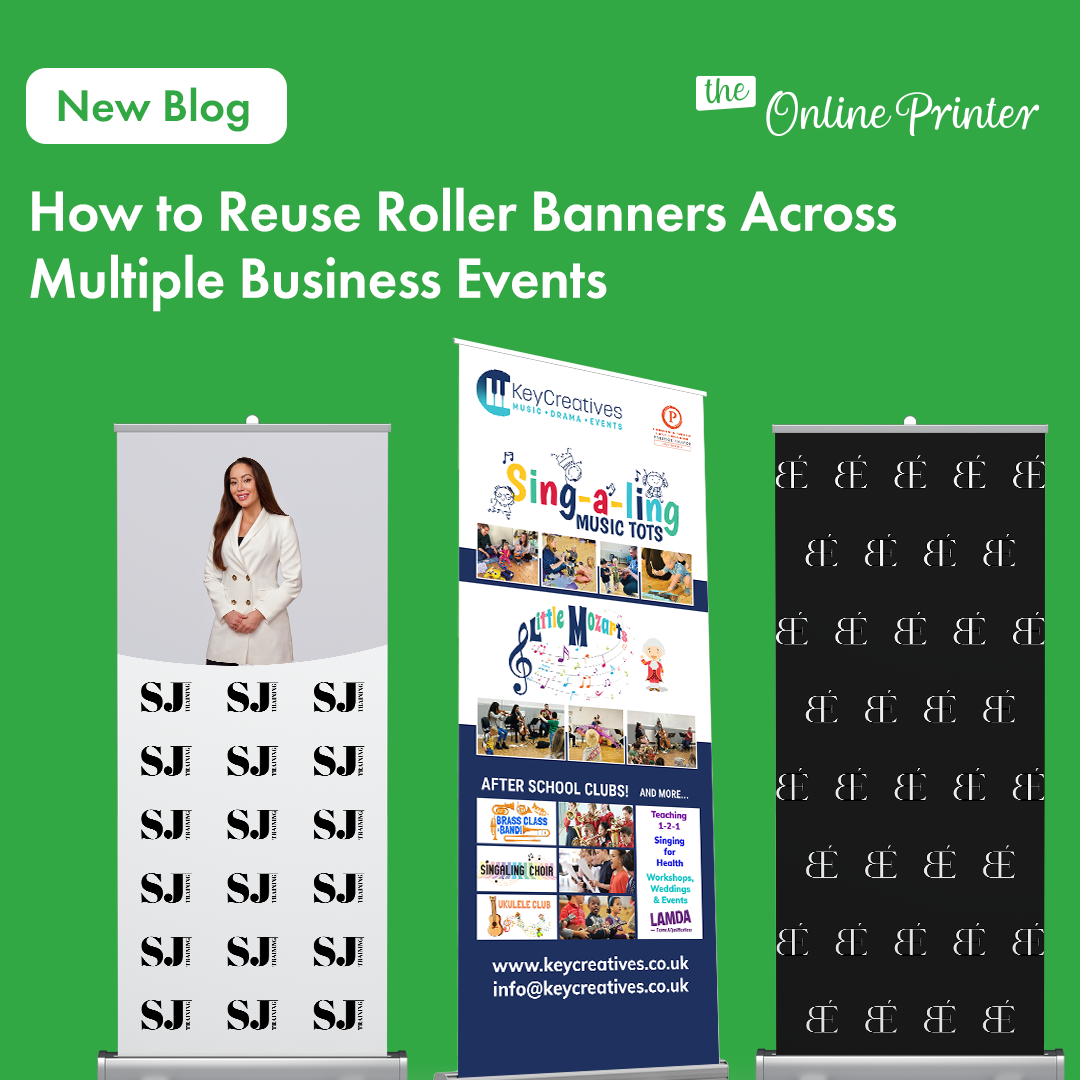
If you’re attending exhibitions, matching your cards with a professionally printed Roller Banner helps create a coordinated presentation.
Consistent branding makes your company easier to recognise across different promotional channels.
Consider Both Sides of Your Card
Using both sides can help organise your information without overcrowding the design.
You could place your logo and business name on the front, with contact details on the reverse.
Alternatively, use the back to highlight a short slogan or key service.
Keep the overall design balanced and easy to understand.
Connect Your Cards With Other Marketing
Business cards work particularly well alongside other printed materials.
Professionally printed A5 Flyers can provide more detailed information about your products and services.
Your business card then gives customers a convenient way to keep your contact details.
Businesses offering Gift Vouchers can also include cards with purchases to help recipients find their website or booking information.
Prepare Your Artwork Carefully
Before ordering, check that your artwork uses the correct dimensions.
Ensure your logo and graphics are high resolution.
Keep important text within the recommended safe area and allow for any required bleed.
Proofread telephone numbers, email addresses and website details carefully.
Create a Lasting Impression
An effective business card doesn’t need an elaborate design.
By focusing on readability, consistent branding and essential information, you can create something professional and memorable.
Thoughtfully designed business cards can help turn everyday introductions into valuable business opportunities.